Sanskrit Encyclopaedia
Guru Ashtakam
By Adi Shankaracharya
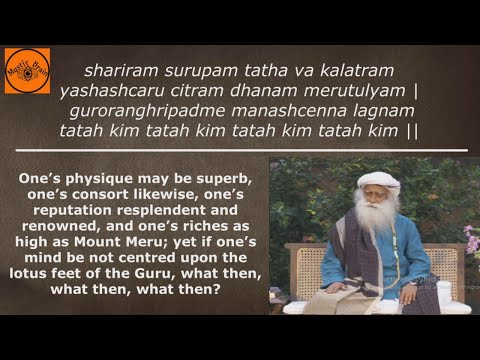
Each verse ends with: “In the lotus feet of the Guru, if the mind is not absorbed, then what is the use? What is the use? What is the use? What is the use?”
Verse 1
शरीरं सुरूपं तथा वा कलत्रं
यशश्चारु चित्रं धनं मेरुतुल्यम् ।
गुरोरङ्घ्रिपद्मे मनश्चेन्न लग्नं
ततः किं ततः किं ततः किं ततः किम् ॥
शरीरं सुरूपं तथा वा कलत्रं — The body may be beautiful, and so too the spouse
शरीरम् (śarīram): body सुरूपम् (surūpam): beautiful, well-formed (su = good, rūpa = form) तथा (tathā): so, likewise वा (vā): or, and also कलत्रम् (kalatram): wife, spouseयशश्चारु चित्रं धनं मेरुतुल्यम् — Fame may be wonderfully attractive, and wealth equal to Mount Meru
यशः (yaśaḥ): fame, glory चारु (cāru): beautiful, attractive चित्रम् (citram): wonderful, remarkable धनम् (dhanam): wealth मेरु (meru): Mount Meru (the mythical golden mountain at the center of the universe) तुल्यम् (tulyam): equal to, comparable toगुरोरङ्घ्रिपद्मे मनश्चेन्न लग्नं — In the lotus feet of the Guru, if the mind is not absorbed
गुरोः (guroḥ): of the Guru अङ्घ्रि (aṅghri): foot पद्मे (padme): in the lotus (locative case of padma) मनः (manaḥ): mind चेत् (cet): if न (na): not लग्नम् (lagnam): attached, absorbed, fixed uponततः किं ततः किं ततः किं ततः किम् — Then what use? Then what use? Then what use? Then what use?
ततः (tataḥ): then, from that किम् (kim): what (use)? — rhetorical: "of what avail?"Verse 2
कलत्रं धनं पुत्रपौत्रादि सर्वं
गृहं बान्धवाः सर्वमेतद्धि जातम् ।
गुरोरङ्घ्रिपद्मे मनश्चेन्न लग्नं
ततः किं ततः किं ततः किं ततः किम् ॥
कलत्रं धनं पुत्रपौत्रादि सर्वं — Spouse, wealth, sons, grandsons and all the rest
कलत्रम् (kalatram): wife, spouse धनम् (dhanam): wealth पुत्र (putra): son पौत्र (pautra): grandson आदि (ādi): and so on, et cetera सर्वम् (sarvam): all, everythingगृहं बान्धवाः सर्वमेतद्धि जातम् — Home, relatives — all these may indeed be there
गृहम् (gṛham): house, home बान्धवाः (bāndhavāḥ): relatives, kinsmen सर्वम् (sarvam): all एतत् (etat): this हि (hi): indeed, certainly जातम् (jātam): born, arisen, presentगुरोरङ्घ्रिपद्मे मनश्चेन्न लग्नं — In the lotus feet of the Guru, if the mind is not absorbed
गुरोः (guroḥ): of the Guru अङ्घ्रि (aṅghri): foot पद्मे (padme): in the lotus (locative case of padma) मनः (manaḥ): mind चेत् (cet): if न (na): not लग्नम् (lagnam): attached, absorbed, fixed uponततः किं ततः किं ततः किं ततः किम् — Then what use? Then what use? Then what use? Then what use?
ततः (tataḥ): then, from that किम् (kim): what (use)? — rhetorical: "of what avail?"Verse 3
षडङ्गादिवेदो मुखे शास्त्रविद्या
कवित्वादि गद्यं सुपद्यं करोति ।
गुरोरङ्घ्रिपद्मे मनश्चेन्न लग्नं
ततः किं ततः किं ततः किं ततः किम् ॥
षडङ्गादिवेदो मुखे शास्त्रविद्या — The Vedas with their six limbs may be on one's lips, and the knowledge of all scriptures
षडङ्ग (ṣaḍaṅga): six limbs (the six Vedāngas — śikṣā, chandas, vyākaraṇa, nirukta, jyotiṣa, kalpa) आदि (ādi): and so on वेदः (vedaḥ): the Vedas मुखे (mukhe): on the face/lips, i.e. memorized and recitable शास्त्र (śāstra): scriptures, sciences विद्या (vidyā): knowledgeकवित्वादि गद्यं सुपद्यं करोति — One may compose fine prose and beautiful poetry
कवित्व (kavitva): poetic ability, the art of poetry आदि (ādi): and so on गद्यम् (gadyam): prose सु (su): good, beautiful पद्यम् (padyam): verse, poetry करोति (karoti): does, makes, composesगुरोरङ्घ्रिपद्मे मनश्चेन्न लग्नं — In the lotus feet of the Guru, if the mind is not absorbed
गुरोः (guroḥ): of the Guru अङ्घ्रि (aṅghri): foot पद्मे (padme): in the lotus (locative case of padma) मनः (manaḥ): mind चेत् (cet): if न (na): not लग्नम् (lagnam): attached, absorbed, fixed uponततः किं ततः किं ततः किं ततः किम् — Then what use? Then what use? Then what use? Then what use?
ततः (tataḥ): then, from that किम् (kim): what (use)? — rhetorical: "of what avail?"Verse 4
विदेशेषु मान्यः स्वदेशेषु धन्यः
सदाचारवृत्तेषु मत्तो न चान्यः ।
गुरोरङ्घ्रिपद्मे मनश्चेन्न लग्नं
ततः किं ततः किं ततः किं ततः किम् ॥
विदेशेषु मान्यः स्वदेशेषु धन्यः — One may be honored in foreign lands and prosperous in one's own land
विदेशेषु (videśeṣu): in foreign countries (vi = different, deśa = country, -eṣu = locative plural) मान्यः (mānyaḥ): honored, respected स्वदेशेषु (svadeśeṣu): in one's own country (sva = own, deśa = country) धन्यः (dhanyaḥ): fortunate, prosperous, blessedसदाचारवृत्तेषु मत्तो न चान्यः — "In righteous conduct, there is none greater than me"
सदाचार (sadācāra): good conduct, righteous behavior (sat = good, ācāra = conduct) वृत्तेषु (vṛtteṣu): in practices, in ways of life मत्तः (mattaḥ): than me (ablative of aham) न (na): not च (ca): and अन्यः (anyaḥ): another, otherगुरोरङ्घ्रिपद्मे मनश्चेन्न लग्नं — In the lotus feet of the Guru, if the mind is not absorbed
गुरोः (guroḥ): of the Guru अङ्घ्रि (aṅghri): foot पद्मे (padme): in the lotus (locative case of padma) मनः (manaḥ): mind चेत् (cet): if न (na): not लग्नम् (lagnam): attached, absorbed, fixed uponततः किं ततः किं ततः किं ततः किम् — Then what use? Then what use? Then what use? Then what use?
ततः (tataḥ): then, from that किम् (kim): what (use)? — rhetorical: "of what avail?"Verse 5
क्षमामण्डले भूपभूपालवृन्दैः
सदा सेवितं यस्य पादारविन्दम् ।
गुरोरङ्घ्रिपद्मे मनश्चेन्न लग्नं
ततः किं ततः किं ततः किं ततः किम् ॥
क्षमामण्डले भूपभूपालवृन्दैः — On the surface of the earth, by groups of kings and rulers
क्षमा (kṣamā): the earth मण्डले (maṇḍale): in the sphere, on the surface भूप (bhūpa): king (bhū = earth, pa = protector) भूपाल (bhūpāla): king, ruler (synonym of bhūpa) वृन्दैः (vṛndaiḥ): by groups, by multitudes (instrumental plural)सदा सेवितं यस्य पादारविन्दम् — Whose lotus feet are ever worshipped
सदा (sadā): always, ever सेवितम् (sevitam): served, worshipped यस्य (yasya): whose पाद (pāda): foot अरविन्दम् (aravindam): lotusगुरोरङ्घ्रिपद्मे मनश्चेन्न लग्नं — In the lotus feet of the Guru, if the mind is not absorbed
गुरोः (guroḥ): of the Guru अङ्घ्रि (aṅghri): foot पद्मे (padme): in the lotus (locative case of padma) मनः (manaḥ): mind चेत् (cet): if न (na): not लग्नम् (lagnam): attached, absorbed, fixed uponततः किं ततः किं ततः किं ततः किम् — Then what use? Then what use? Then what use? Then what use?
ततः (tataḥ): then, from that किम् (kim): what (use)? — rhetorical: "of what avail?"Verse 6
यशो मे गतं दिक्षु दानप्रतापात्
जगद्वस्तु सर्वं करे यत्प्रसादात् ।
गुरोरङ्घ्रिपद्मे मनश्चेन्न लग्नं
ततः किं ततः किं ततः किं ततः किम् ॥
यशो मे गतं दिक्षु दानप्रतापात् — "My fame has spread in all directions through the power of my generosity"
यशः (yaśaḥ): fame, glory मे (me): my गतम् (gatam): gone, spread दिक्षु (dikṣu): in the directions (locative plural of diś) दान (dāna): charity, generosity प्रतापात् (pratāpāt): through the power/glory of (ablative of pratāpa)जगद्वस्तु सर्वं करे यत्प्रसादात् — "All the things of the world are in my hand by whose grace"
जगत् (jagat): world वस्तु (vastu): thing, substance सर्वम् (sarvam): all, everything करे (kare): in the hand (locative of kara) यत् (yat): whose, by which प्रसादात् (prasādāt): by the grace of (ablative of prasāda)गुरोरङ्घ्रिपद्मे मनश्चेन्न लग्नं — In the lotus feet of the Guru, if the mind is not absorbed
गुरोः (guroḥ): of the Guru अङ्घ्रि (aṅghri): foot पद्मे (padme): in the lotus (locative case of padma) मनः (manaḥ): mind चेत् (cet): if न (na): not लग्नम् (lagnam): attached, absorbed, fixed uponततः किं ततः किं ततः किं ततः किम् — Then what use? Then what use? Then what use? Then what use?
ततः (tataḥ): then, from that किम् (kim): what (use)? — rhetorical: "of what avail?"Verse 7
न भोगे न योगे न वा वाजिराजौ
न कान्तामुखे नैव वित्तेषु चित्तम् ।
गुरोरङ्घ्रिपद्मे मनश्चेन्न लग्नं
ततः किं ततः किं ततः किं ततः किम् ॥
न भोगे न योगे न वा वाजिराजौ — Not in pleasures, not in yoga, not in horses and royal splendor
न (na): not भोगे (bhoge): in enjoyment, in pleasures (locative of bhoga) योगे (yoge): in yoga, in spiritual practice वा (vā): or वाजिराजौ (vājirājau): in the king of horses, i.e. in royal mounts/splendor (vāji = horse, rāja = king)न कान्तामुखे नैव वित्तेषु चित्तम् — Not in the face of the beloved, nor in wealth, is the mind fixed
कान्ता (kāntā): beloved, wife मुखे (mukhe): in the face (locative of mukha) न एव (na eva → naiva): not at all वित्तेषु (vitteṣu): in wealth, in riches (locative plural of vitta) चित्तम् (cittam): mind, consciousnessगुरोरङ्घ्रिपद्मे मनश्चेन्न लग्नं — In the lotus feet of the Guru, if the mind is not absorbed
गुरोः (guroḥ): of the Guru अङ्घ्रि (aṅghri): foot पद्मे (padme): in the lotus (locative case of padma) मनः (manaḥ): mind चेत् (cet): if न (na): not लग्नम् (lagnam): attached, absorbed, fixed uponततः किं ततः किं ततः किं ततः किम् — Then what use? Then what use? Then what use? Then what use?
ततः (tataḥ): then, from that किम् (kim): what (use)? — rhetorical: "of what avail?"Verse 8
अरण्ये न वा स्वस्य गेहे न कार्ये
न देहे मनो वर्तते मे त्वनर्घ्ये ।
गुरोरङ्घ्रिपद्मे मनश्चेन्न लग्नं
ततः किं ततः किं ततः किं ततः किम् ॥
अरण्ये न वा स्वस्य गेहे न कार्ये — Neither in the forest, nor in one's own home, nor in duty
अरण्ये (araṇye): in the forest (locative of araṇya) न (na): not वा (vā): or स्वस्य (svasya): one's own (genitive of sva) गेहे (gehe): in the home (locative of geha) कार्ये (kārye): in work, in duty (locative of kārya)न देहे मनो वर्तते मे त्वनर्घ्ये — Not in the body does my mind dwell, for it is beyond price
न (na): not देहे (dehe): in the body (locative of deha) मनः (manaḥ): mind वर्तते (vartate): dwells, abides, exists मे (me): my तु (tu): but, indeed अनर्घ्ये (anargye): in that which is priceless (an = not, arghya = having a price)गुरोरङ्घ्रिपद्मे मनश्चेन्न लग्नं — In the lotus feet of the Guru, if the mind is not absorbed
गुरोः (guroḥ): of the Guru अङ्घ्रि (aṅghri): foot पद्मे (padme): in the lotus (locative case of padma) मनः (manaḥ): mind चेत् (cet): if न (na): not लग्नम् (lagnam): attached, absorbed, fixed uponततः किं ततः किं ततः किं ततः किम् — Then what use? Then what use? Then what use? Then what use?
ततः (tataḥ): then, from that किम् (kim): what (use)? — rhetorical: "of what avail?"Key Recurring Words
गुरु (guru): teacher, the one who dispels darkness (gu = darkness, ru = remover)
अङ्घ्रि (aṅghri): foot
पद्म (padma): lotus
मनस् (manas): mind
लग्न (lagna): attached, absorbed, fixed
ततः (tataḥ): then
किम् (kim): what (use)?